

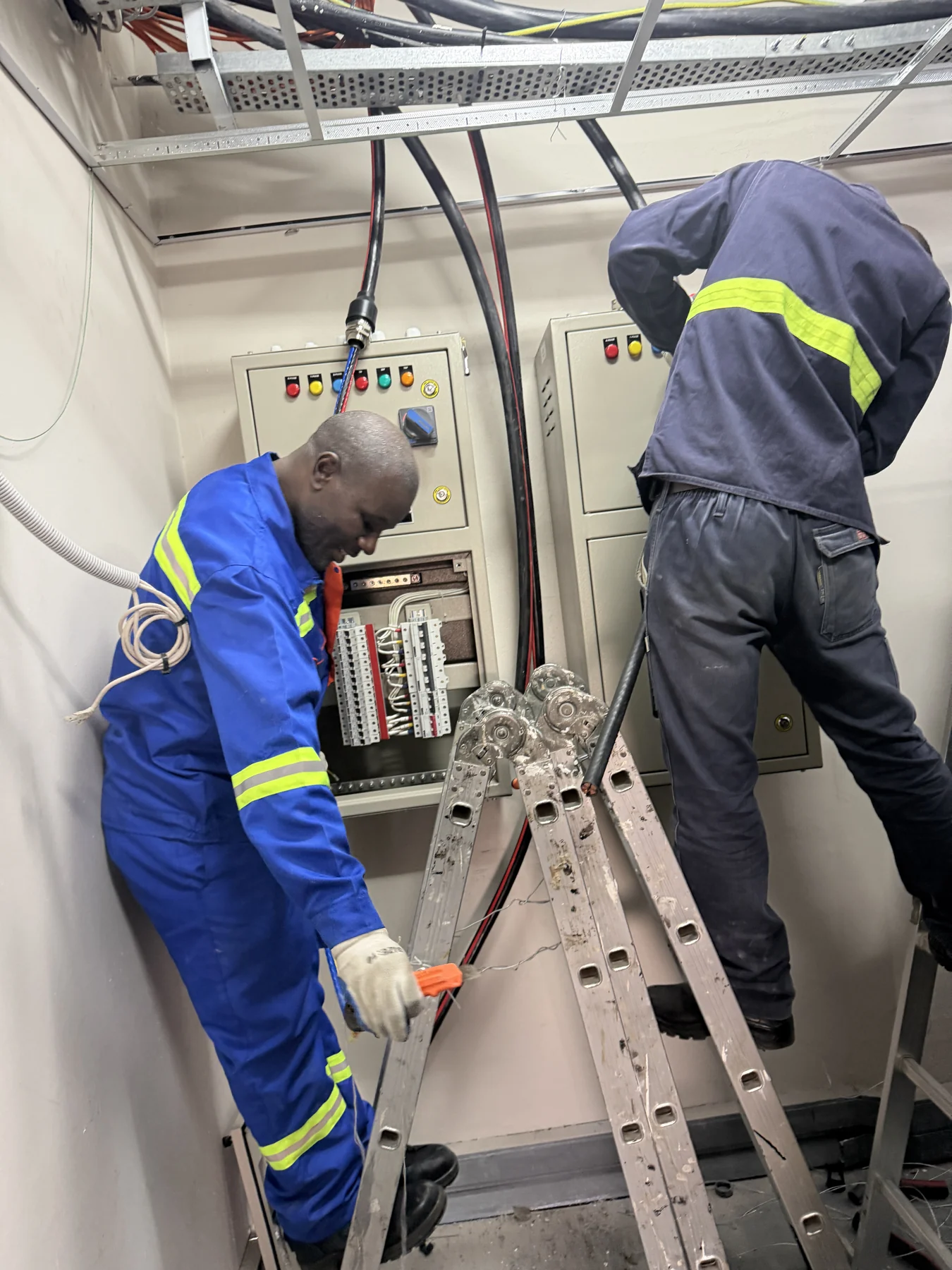
Good technology decisions start with the operating requirement. Before equipment is selected or installation begins, the organisation should understand the problem, the environment and the level of reliability the business actually needs.
Know the load before selecting a UPS
UPS sizing begins with the equipment that must remain running. Servers, switches, routers, storage, CCTV recorders and other critical devices have different power requirements. Measure or calculate the actual load and leave appropriate headroom instead of choosing capacity only from the equipment label.
Decide what “continuity” means for the site
Some organisations need only enough runtime for systems to shut down safely. Others need the network and core services to remain online until a generator starts or normal power returns. Required runtime changes battery size, UPS topology and cost significantly.
Protect against more than outages
Voltage variation, surges, poor earthing and unstable supply can damage equipment or create intermittent faults. Power continuity planning should consider electrical protection and distribution, not only battery backup.
Separate critical and non-critical loads
Keeping every device on backup power can make the system unnecessarily large. Identify which equipment is essential for operations and which can safely stop during an outage. Segregating loads improves efficiency and makes maintenance easier.
Plan for batteries and maintenance
UPS batteries are consumable components. Temperature, age and discharge cycles affect performance. Organisations should know how batteries will be tested, replaced and disposed of, and how the UPS itself will be maintained without interrupting critical services.
Test the complete operating scenario
A backup system is only proven when the full chain is tested: mains failure, UPS transfer, required runtime, generator interaction where applicable, alarms and system recovery. Periodic testing turns theoretical resilience into operational confidence.
MyTech can assess your site and translate the requirement into a practical technical design and implementation plan.
Request a consultation ↗